
 Careers
 18 Years of Success: Dual Emissivity Coating System Performance on MiRO’s Delayed Coker Heaters
Integrated Global Services’ (IGS) Cetek® dual emissivity coating system was designed specifically for single-fired coker heater applications and similar scenarios where internal coking in radiant section process tubes reduces run length and restricts throughput. The coating system improves uniformity of heat flux distribution and reduces peak-to-average flux ratio in single-fired heaters. This leads to reduced tube skin temperature, lower coking rate, increased run length, and higher charge rate.
This case study outlines the coating technology as applied to MiRO’s coker heaters, the results from the first run, and the 2024 reapplication to maintain those benefits.
The Challenge of Radiant Section Heat Flux
Radiant section heat flux in fired heaters is typically non-uniform — not a major concern for most units but very damaging in Delayed Coker Unit (DCU) heaters. Higher flux areas cause coke to form rapidly inside radiant tubes, increasing localized tube skin temperatures and shortening run length.
H24-14414
The Solution: Variable Emissivity Tube Coatings
Cetek’s patented dual emissivity coating system, paired with high emissivity refractory coatings, is a durable solution for DCU coking issues.
-
Low emissivity tube coatings are applied to hot zones to reduce heat absorption.
-
High emissivity coatings are used in low-flux zones to increase absorption and improve heat distribution.
In the high flux areas, a factor which determines the propensity and degree of coking is the ratio of Peak Flux over Average Flux, around the tubes’ circumference. A typical ratio for conventional single-fired heaters is 1.4. After the application of the Cetek coating system, to both the refractory and tube surfaces, this ratio is typically reduced to around 1.2.

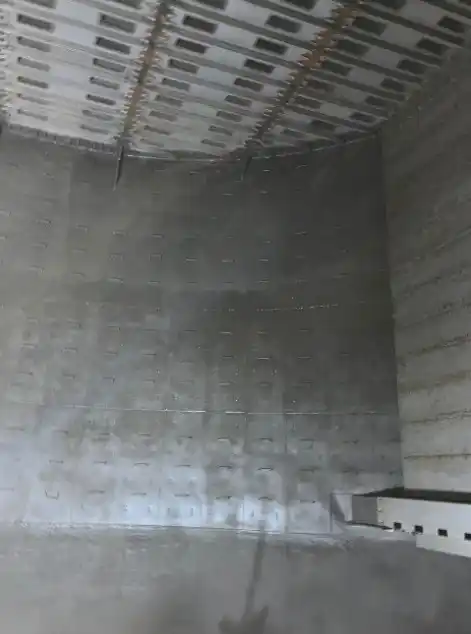
Application to MiRO’s Delayed Coker Heaters
Location: MiRO Refinery, Karlsruhe, Germany
Date: Initial application – March 2006
MiRO’s goals:
-
Increase heater on-stream factor
-
Extend run length between spalls
-
Boost throughput capability
-
Improve reliability and enable accurate IR thermography inspections
Evaluation of Heaters, Design of Coating Application
The IR thermography image, shown in Figure 2, provides a typical view, identifying the high heat flux zone on the lower half of the side wall. This is evidenced by the appearance of high tube surface temperatures, caused initially by coke formation inside the tube and subsequently by severe oxidation and scale formation on the outer tube surfaces.
The MiRO coker heater is a four pass, two cell heater with a maximum throughput capability of 230-239 t/hr. Cetek, Conoco and MiRO completed a joint study in 2005 and the following Cetek ceramic coating design was recommended for the heater:
- Application of high emissivity refractory coating to the side wall and roof in radiant sections of all heater passes, with no coating on the floor or end walls. This would provide an increased heat flux to the back (cold) surfaces of the tubes.
- Application of high emissivity tube coating to the top half and low emissivity coating on the bottom half of the nine roof tubes.
- Application of high emissivity tube coating on the whole circumference of the top six side wall tubes.
- Application of low emissivity coating to the front 180 degrees and high emissivity coating to the back 180 degrees of the bottom 10 tubes located on the side walls of the heater.
Coating Application
The coating application was completed during the March 2006 shutdown at MiRO in Karlsruhe. The tube surfaces were grit blasted to the Cetek specification, with a controlled humidity environment inside the heater cells.
After thorough clean up, the prescribed ceramic coatings were then applied, as shown in the schematic in Figure 1.
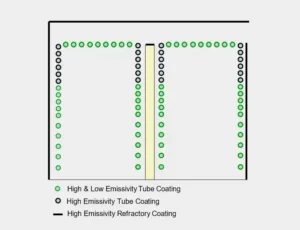
Figure 1. Coker Heater Schematic, Showing Ceramic Coating Application
The simulation indicates that the coating application described above would provide a furnace run length increase of 15 -20% (based on the three month run-length) at constant throughput.
Simulation Results (Before vs After Coating)
Cost and schedule savings comparison of various options for this project.
| Metric | Before | After |
|---|---|---|
| Average Flux (Upper Wall Tubes) (kW/m²) | 40.1 | 43.1 |
| Average Flux (Roof Tubes) | 40.1 | 39.7 |
| Average Flux (Lower Wall Tubes) | 40.1 | 38.8 |
| Flux Ratio (Front 180° / Avg) | 1.42 | 1.25 |
| Bridge Wall Temperature (°C) | 817 | 805 |
Key Results from 2006 Coating Application
-
Run length extended to 5 months under maximum charge rate
-
Tube Metal Temperature (TMT) rise reduced to 0.35°C/day (from 0.48°C/day)
-
Lower flue gas and bridge wall temperatures despite higher throughput
-
More uniform tube surface temperatures
-
Improved IR inspection reliability
Figure 2: First Run After Coating: Rate of increase in Tube Metal temperature


Figure 3: Bridge Wall and Flue Gas Temperatures
Intermediate Inspections
-
2010: Coating still in excellent condition after 4 years of service
-
2022: Some flash rust (easily removable), tube coating intact, refractory coating deteriorated
2024 Reapplication
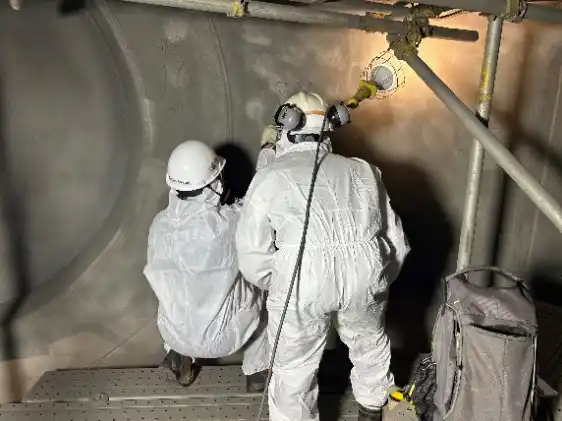
MiRO opted to renew the Cetek coating in 2024 to:
-
Maintain longer run lengths
-
Keep bridge wall temperatures low
-
Protect process tubes
-
Preserve accurate IR monitoring

Long-Term Value & Best Practices
-
Adopted as standard practice at MiRO
-
Proven over 18 years of performance
-
Lower maintenance and operating costs
-
Supports predictive maintenance strategies
-
Strong ROI and scalable across units
Conclusion
The sustained success of Cetek coatings since 2006 validates the technology as a crucial tool for optimizing fired heater operations. MiRO’s decision reflects confidence in the coating’s ability to deliver continued performance improvements and asset protection, while the expansion to other units demonstrates its versatility and reliability across different applications.

Free consultation with an IGS Subject Matter Expert
IGS is here to provide information, answer questions and create an effective solution for your needs.