
Inside Automated Field Welding: Insights from a Global Welding Operations Lead
Automated field welding is often viewed as a technical process – equipment, parameters, procedures. But in reality, its success depends just as much on planning, adaptability, and experience as it does on technology.
We spoke with Antoni Zarychta, Global Welding Operations Lead at IGS with a background in production management, materials engineering, and over five years of experience in automated field welding, about what truly drives successful automated field welding deployments in the field.
Antoni’s path into automated field welding was a natural one.
With a Master’s degree in Production Management and Engineering and a background in Materials Engineering, he entered the sector with both technical understanding and operational discipline. His work today focuses on:
His experience spans oil & gas, petrochemical, power generation, and waste-to-energy industries.
Over the years, he has led automated welding projects, including the application of corrosion-resistant weld overlay with alloys such as Inconel and stainless steel, structural weld overlay, automated carbon steel build-up, crack repairs, nozzle and manways weld overlay. He has also managed complex coke drum repairs and large-scale boiler tube panel overlays across the UK, Italy, Spain, Scandinavia and Austria.
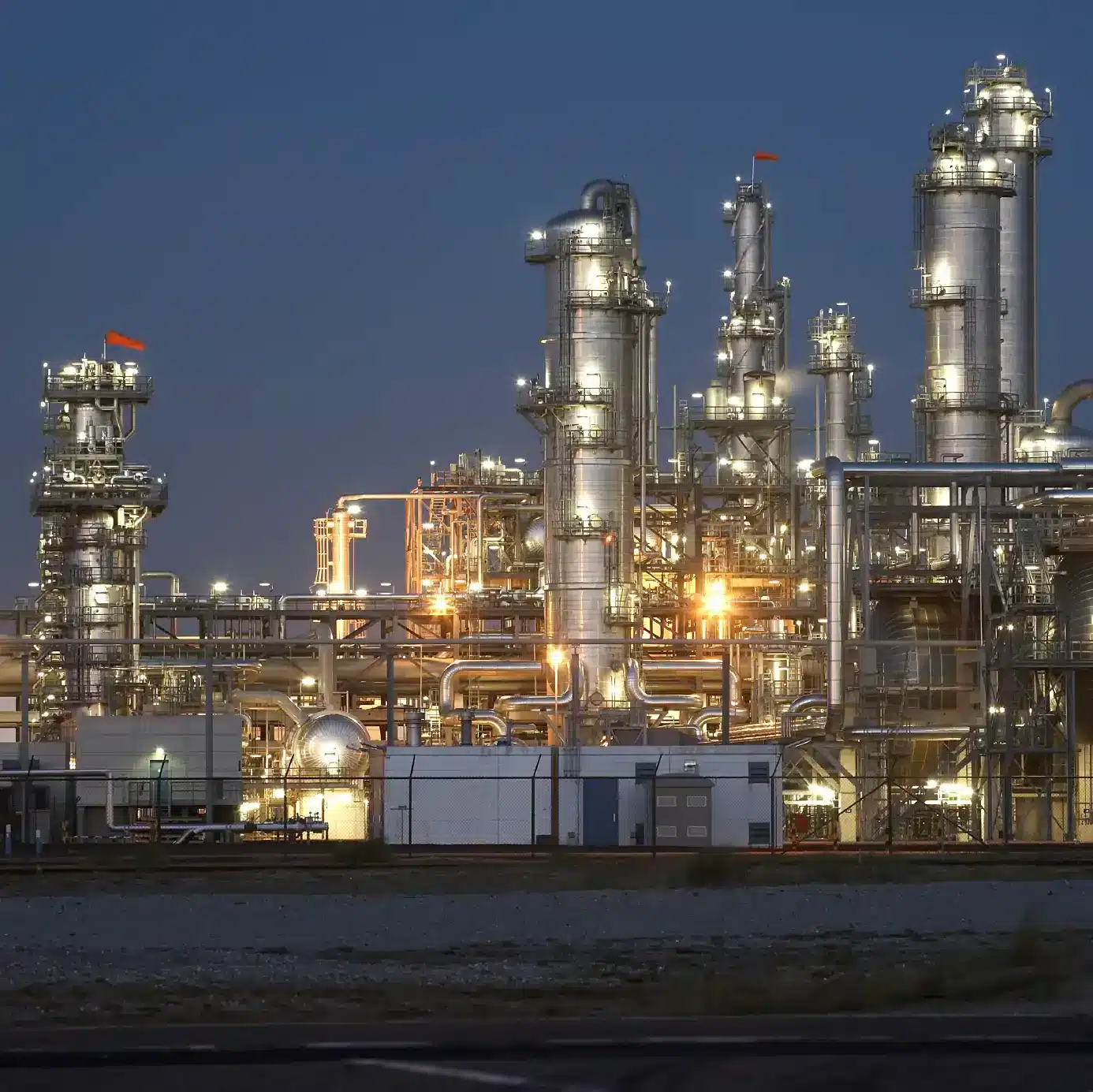
According to Antoni, automated welding delivers several critical advantages over manual methods, particularly in demanding field environments.
And in turnaround environments, predictability equals schedule and cost control.
One of the most common challenges in automated welding projects isn’t technical, it’s scope change.
Turnaround scopes are typically based on inspections from previous outages, sometimes conducted years earlier. Once vessels or boilers are opened, the actual corrosion or cracking can be far more severe than expected.
For less experienced contractors, this can cause significant delays.
Antoni emphasizes that agility is critical: “When the real-world scenario looks different than anticipated, you need experience and resources to adapt immediately.”
At IGS, global reach and cross-trained crews allow rapid mobilization of additional support when needed, sometimes within hours. Equally important is field experience: project managers and supervisors who have seen these scenarios before and know how to respond without compromising quality or safety.
Antoni recalls a situation from a previous project in which inadequate preparation caused significant delays.
A separate contractor was responsible for replacing a vessel window. Once the original section was cut out, corrosion-related wall thinning meant the new component did not match the original drawings.
Lacking sufficient equipment or experience to make on-site adjustments, the contractor struggled to fit the replacement properly, delaying not only their work but also other welding activities in the same vessel.
– Antoni notes.
This is why detailed planning and real-world execution knowledge are critical. Welding expertise alone is not enough; complex engineering scopes require experienced planners who understand what can go wrong and how to mitigate it before it does.
Currently, Antoni’s team is completing a major weld overlay project for one of the world’s largest LNG producers.
The scope includes overlay application on more than 150 pipe ends.
The environment itself presents challenges:
Daily coordination with the general contractor, forward planning, and continuous communication with the asset owner have kept the project on track.
From Antoni’s perspective, the deployment is a success:
What excites Antoni most about building this capability at IGS is the combination of deep technical experience with global reach.
IGS teams include professionals from the U.S., Poland, the Czech Republic, South Africa, and beyond, coming together to execute projects worldwide. “IGS is known for fast response times and global presence,” Antoni says. “Pairing that with specialized welding expertise allows us to deliver more value, especially in urgent or unexpected situations.”
The LNG project also demonstrated the power of hybrid solutions, combining weld overlay with other IGS technologies such as High Velocity Thermal Spray (HVTS).
This integration is where Antoni sees the future: “Combining automated welding services with other IGS solutions allows us to design smarter, more efficient protection strategies for our clients.”
Perhaps the most important takeaway from Antoni’s perspective is this:
IGS is not building its automated field welding capability from theory but from real project experience.
Lessons learned in oil & gas, petrochemical, and power environments directly inform planning, safety integration, and execution workflows.
And in high-risk, high-pressure turnaround environments, experience is what separates smooth execution from costly disruption.
Connect with our experts today at [email protected] or by sending us a message below.