
 Careers
 Increasing Efficiency and Reducing Cleaning in the Second Pass of a WtE Boiler
This case study explores how two Scandinavian waste-to-energy plants improved boiler performance by tackling heavy slagging in the second pass of their Babcock & Wilcox units. By implementing IGS’s SlagSlide solution, both facilities reduced cleaning demands, cut operational costs, and moved toward safer, more efficient, long-term boiler reliability.
T25-42344 & 36860
Operational Context and Challenge
Two waste-to-energy facilities in Scandinavia, both operating Babcock & Wilcox-designed grate-fired boilers, were experiencing severe slagging in the second pass of their boilers, a known area for fouling and slag accumulation. One plant relied on manual cleaning methods, whilethe other utilized an expensive automated water-based system.

Denmark – Carbon Steel Tubes
Without an automated cleaning system, the WtE facility in Denmark depended on repeated manual pressure wave cleaning throughout the year; a method that uses controlled micro-explosions to shed accumulated slag. This practice was labor-intensive, disruptive, and carried inherent safety risks.
Sweden – HVTS-Cladded Tubes
In Sweden, the boiler featured IGS HVTS cladding in the second pass, but the plant continued to use a high-pressure water shower system. While intended to maintain cleanliness, this cleaning method contributed to increased maintenance costs.
Both operators sought a more sustainable, low-maintenance solution to improve uptime and reduce their reliance on cleaning, either manual or automated, without compromising boiler efficiency.
Evaluating Technical Options to Ensure Consistent Output
The plants had several pathways to address the slagging issues.
- Continue with existing cleaning protocols, accepting ongoing costs and risks.
- Install or upgrade mechanical soot blowers or water-based shower systems, incurring capital costs and potential operational side effects.
- Use an anti-slagging surface treatment, aimed at preventing slag adhesion in the first instance.
Both sites selected IGS’s SlagSlide™ slag-shedding solution. The decision was driven by:
- Proven IGS field experience with WtE and biomass boilers
- The potential to reduce or eliminate cleaning events,
- Compatibility with both carbon steel and HVTS substrates,
- A safer, passive solution requiring no moving parts or utilities.
Safe, Engineered Delivery of the SlagSlide Solution
IGS executed both projects in accordance with its ISO-certified safety, quality, and environmental procedures. The deployments included:
- Sweden – Refurbishment of a part of 300 m² of previously cladded surfaces using IGS HVTS alloy, followed by slag-shedding surface conditioner.
- Denmark – First-time application of the IGS slag-shedding system to 424 m² of developed surface area across carbon steel and Inconel waterwalls in the second and lower third pass.
Each project was completed within the agreed shutdownwindow with zero safety incidents.

Future Partnership and Ongoing Monitoring
IGS is actively engaged with both sites to monitor performance and refine cleaning strategies. Follow-up visits are planned during upcoming outages in 2025 and 2026 to evaluate results, adjust maintenance routines, and explore additional units for SlagSlide deployment.
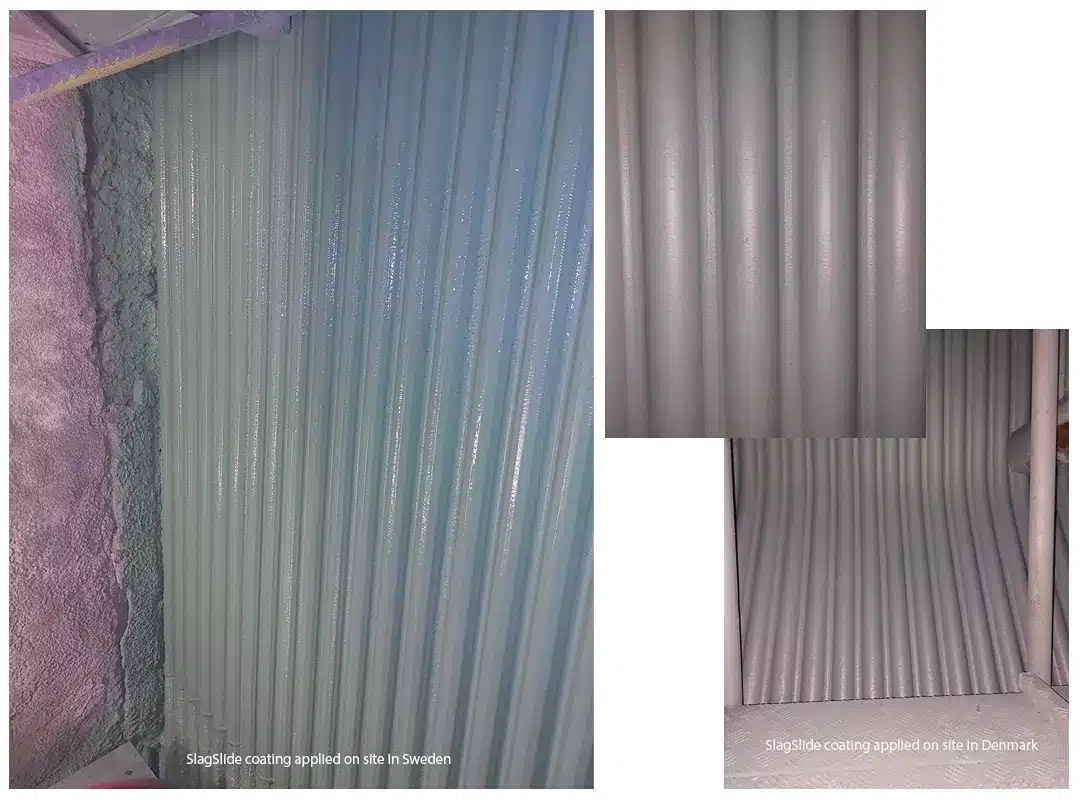
Reducing Cleaning Frequency and Maintenance Cost
While full ROI validation is expected during the summer 2026 outages, early indicators are promising.
In Denmark, the client aims to significantly reduce, or completely eliminate, manual operations, improving safety and saving labor time.
In Sweden, the goal is to minimize reliance on the water shower system, which has been shown to damage substrate material due to thermal shock effects.Reducing its use not only lowers operational costs but also preserves the integrity of the base material.
If results align with early expectations, both plants stand to benefit from:
- Lower maintenance expenditure,
- Improved cladding durability
- Higher boiler uptime through reduced fouling,
- And safer, more predictable shutdown planning.
“This slag-shedding technology is about removing uncertainty. With SlagSlide, we’re giving these operators the confidence to move away from reactive cleaning and toward long-term boiler performance. That’s where the real ROI lies.”
– Michael Nygaard, Business Development, Director, Scandinavia, IGS
Watch: How to Gain Performance Improvements in Waste to Energy Plants
Free consultation with an IGS Subject Matter Expert
IGS is here to provide information, answer questions and create an effective solution for your needs.