 Careers
 A Guide to Amine Stress Corrosion Cracking in Oil & Gas Processing
Prevention & Mitigation Strategies for Amine Corrosion
There are effective amine corrosion management methods available that require a multi-faceted approach.
Material Selection
- Use appropriate corrosion allowances based on expected service life
- Consider composite construction with CRA cladding in critical areas
- Specify post-weld heat treatment to reduce residual stresses
- Implement proper weld procedures to minimize susceptible microstructures
Process Control
- Maintain recommended amine concentration and loading limits
- Control solution temperature, especially in the reboiler
- Implement effective filtration to remove suspended solids
- Regular analysis and maintenance of amine chemistry
- Monitor and control oxygen ingress
Advanced Amine Corrosion Control Technologies
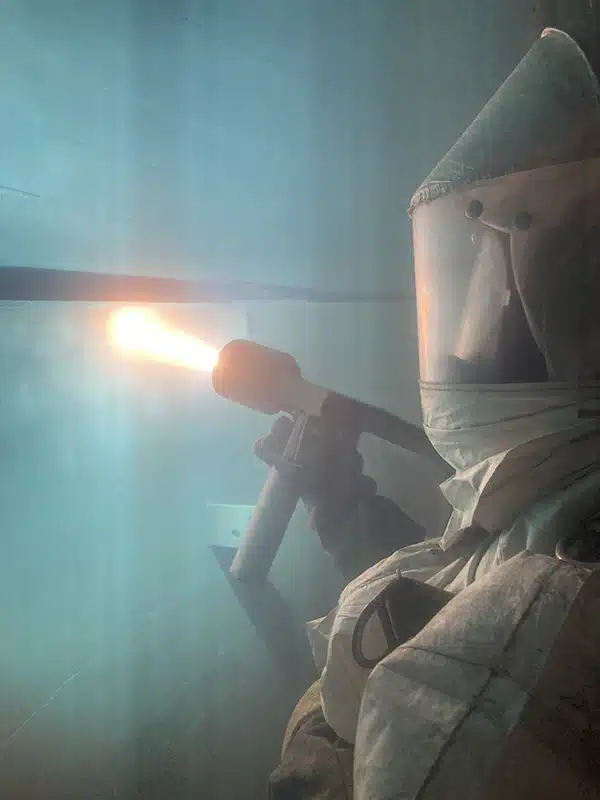
Modern corrosion prevention strategies include innovative approaches like HVTS® (High Velocity Thermal Spray) cladding systems. Unlike traditional methods, HVTS® offers several advantages:
- Application without heat-affected zones
- 3× faster application than welding
- Compatible with existing weld overlays
- Superior corrosion/erosion resistance
- No need for post-weld heat treatment
- Superior mechanical properties compared to organic coatings
- Wide service temperature and pressure ranges
- Ability to be applied in-situ during scheduled turnarounds
- Long-term protection against all forms of sweet corrosion and sour gas attack
Industry Adoption of HVTS® Technology for Amine System Protection
HVTS® technology has become increasingly recognized as a standard practice for protecting amine systems across the oil and gas industry. Major energy companies including Phillips 66, Shell, ExxonMobil, Chevron, and BP have adopted this technology as their preferred solution for amine unit corrosion protection. The widespread implementation of HVTS® in facilities across North America, Europe, and the Middle East demonstrates its effectiveness and reliability in combating amine stress corrosion cracking.
Case Study
Midstream Amine Still Corrosion Solution
During a scheduled turnaround inspection, a Phillips 66 gas treating facility in Giddings, TX discovered severe corrosion damage in the main amine regenerator column between trays 13 and 18. The damage was directly attributed to aggressive amine attack on the carbon steel shell.
Previous Mitigation Attempts
The facility had historically relied on reactive approaches:
- Periodic weld buildup to maintain minimum thickness requirements
- Application of organic coatings on a 5-year turnaround cycle
These methods proved ineffective and costly, as the organic coatings failed prematurely, and required recurring repairs.
HVTS® Solution Implementation
After exploring several coating options that failed to provide guaranteed protection against amine exposure and high temperatures, Phillips 66 consulted with their refining division. IGS HVTS® (High Velocity Thermal Spray) technology was selected as the permanent solution based on excellent performance in amine units across multiple refineries.
The HVTS® application covered 277 square feet of the vessel interior and was completed in just 5 shifts. Critically, the process introduced no heat-affected zones and required no post-weld heat treatment, significantly reducing downtime compared to traditional weld overlay methods.
Results and Long-Term Benefits
By implementing the HVTS® cladding system, Phillips 66 effectively:
- Eliminated the need for recurring repairs in this problem area
- Reduced the total cost of ownership for the asset
- Created a permanent barrier against amine stress corrosion cracking
- Minimized future maintenance requirements and associated downtime
The facility scheduled the next inspection for its next shutdown in five years. During this inspection, thickness readings will be compared against the original application map to verify cladding integrity and performance.
Additional Implementation Examples
Beyond Phillips 66, numerous other facilities have successfully implemented HVTS® technology to address amine corrosion challenges.
- Shell has standardized HVTS® applications in their amine regeneration units across multiple refineries, reporting significant maintenance costs and extended equipment life reductions.
- ExxonMobil facilities have utilized HVTS® cladding for MDEA units, effectively eliminating recurring corrosion issues in previously problematic areas.
- Chevron has implemented HVTS® solutions in both refinery and gas processing amine units, establishing it as their preferred method for addressing stress corrosion cracking in these critical systems.
- Several Middle Eastern national oil companies have adopted HVTS® technology as their standard specification for new amine units and retrofits, based on proven performance in harsh operating environments.
- European refiners have increasingly turned to HVTS® as a permanent solution for amine reboilers and regenerator columns, reporting substantial improvements in equipment reliability and reduced maintenance costs.
Conclusion
Amine stress corrosion cracking is a significant challenge in oil and gas processing operations. Operators can effectively manage internal pipeline and amine plant corrosion by correctly understanding the underlying mechanisms, implementing appropriate materials, and applying advanced protection systems like HVTS® cladding.
A proactive approach to amine corrosion control will ensure reliable operation, extend asset life, and avoid the substantial costs associated with corrosion-related failures. Investment in proper corrosion mitigation strategies pays dividends through improved safety, reduced downtime, and enhanced operational efficiency.
For more information on advanced solutions for pipeline corrosion prevention, contact our corrosion specialists today.
Book a Free Technical Evaluation
More corrosion and erosion management articles from Integrated Global Services:
CO₂ Corrosion Prevention and Control in Oil and Gas Production
Preventing Wet CO₂ Corrosion in Carbon Capture and Storage Project
How to Prevent Microbially Influenced Corrosion (MIC) with On-Site Alloy Upgrade
Why is High Emissivity Coating Durability Important in Fired Heaters?
Strategies for Preventing Internal Pipeline Corrosion in the Energy Industry
Flue Gas Dew Point Corrosion Mitigation: Alloy Upgrading Techniques
Mitigating Metal Dusting Corrosion in Ammonia and Methanol Reformers
Combating Flow Accelerated Corrosion in Power Plants with IGS HVTS Technology
Why an Alloy Upgrade is the Best Solution to Crude Unit Overhead Corrosion Control
Protecting Hydropower Turbines from Corrosion with HVTS Coatings
Protecting Offshore Wind Turbines – Splash Zone Corrosion
The Critical Role of High Emissivity Coatings in Space Exploration
Organic Coatings in Pressure Vessels: Internal Coating Failure Analysis
How to Stop Corrosion on Your Refinery Distillation Column
Causes of Boiler Corrosion and Benefits of Boiler Tube Coating
5 Common Causes of Refractory Failure and How to Fix Them
Boiler Tube Leaks Prevented with Proactive Maintenance
Understanding Oil & Gas CO2 and NOx Emissions, and the Science Behind Reducing Them