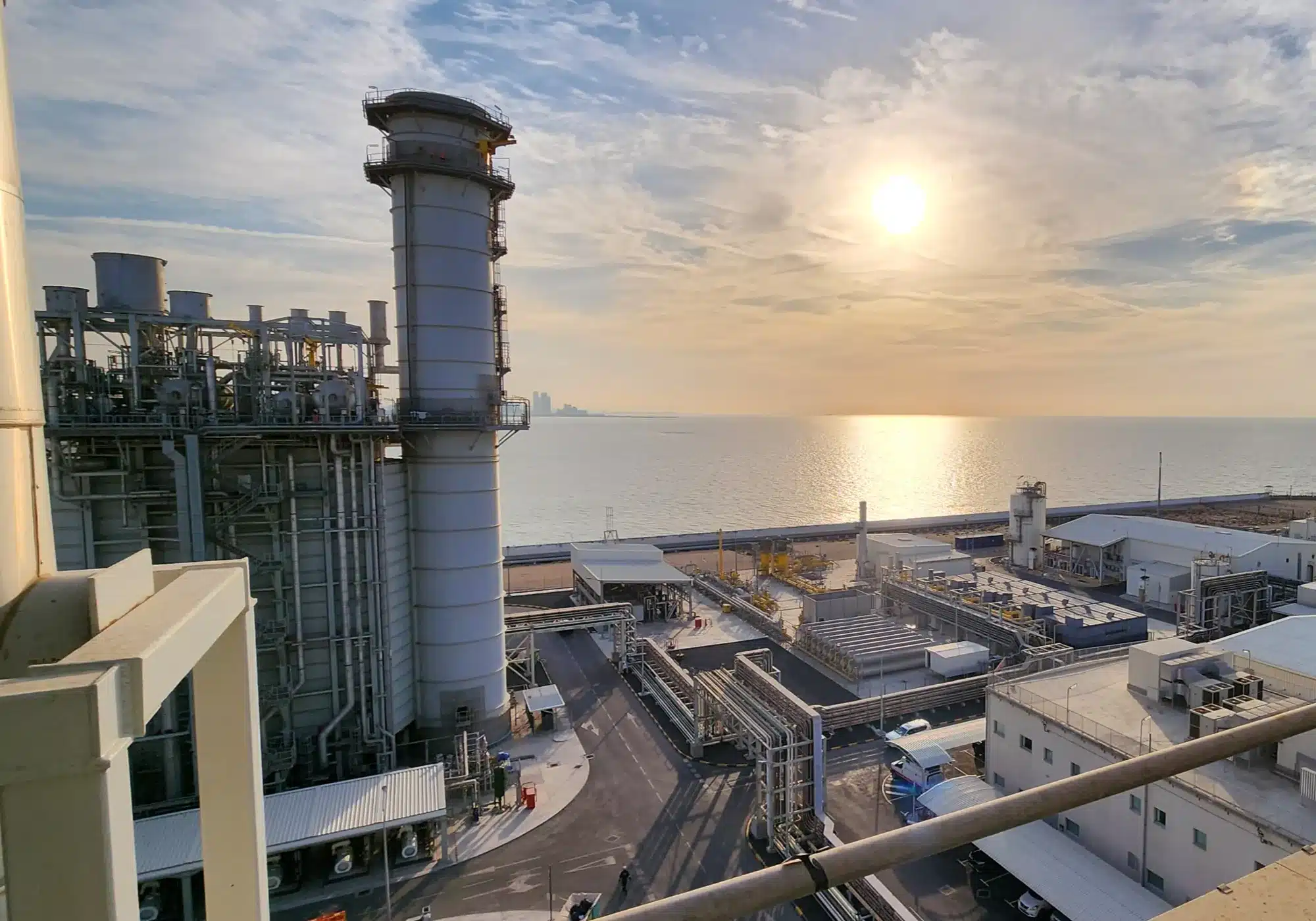
Grid Stability in the Age of AI: Through Boiler and Turbine Integrity

Artificial intelligence is rapidly becoming one of the most significant drivers of global electricity demand. By 2030, data centre consumption is expected to more than double, from 415 TWh to 945 TWh1, driven by AI-optimised servers that use up to ten times the energy of traditional computing. In the United States, data centres may account for nearly half of all demand growth, while in Europe they are projected to add 10–15% to national loads, with some countries already seeing digital infrastructure consume more than 20% of total electricity2.

This surge has widened the ‘availability gap’ – new generation and transmission capacity cannot be built fast enough, making grid stability increasingly dependent on the performance of assets already in service. Despite large-scale investment in renewables and new-build projects, most grids continue to rely on ageing thermal generation (biomass, waste-to-energy and gas-fired units) to provide the dispatchable power needed to balance intermittent supply. Many of these units are now operating well beyond their original design expectations, accelerating degradation mechanisms such as corrosion, erosion, and spallation.

As a result, forced outages have become more consequential, affecting reserve margins, dispatchability and market stability. Preserving the integrity of boilers, turbines and other prime movers through targeted maintenance and protective technologies is therefore essential to sustaining dependable output from the existing fleet and maintaining continuity of supply as demand increases.


Global Outages and Economic Consequences

Across both emerging and developed economies, power outages are becoming more frequent and costly. Blackouts disrupt industry, healthcare, and essential services, and they highlight the vulnerability of grids heavily dependent on ageing thermal assets and insufficient reserve margins. In many regions, rising demand is outpacing operators’ ability to maintain stable, predictable generation.

Across regions, outages and load shedding are becoming more frequent and costly. While triggers vary (fuel constraints, reserve margin stress, ageing infrastructure), the pattern is consistent: degradation in critical components reduces reliability until forced outages become unavoidable. Two equipment areas dominate forced-outage statistics: boiler pressure parts (especially tubes) and gas turbine hot-gas-path components.

South Africa and the Caspian Region – Structural Constraints and Reliability Risk

Across regions such as South Africa and the wider Caspian region, grid instability reflects different immediate pressures but a shared structural vulnerability. In South Africa, the return of Stage 3 load-shedding in early 2025 highlighted the fragility of an ageing fleet operating with strained reserve margins, where repeated breakdowns and unplanned outages left little tolerance for even minor equipment failures.

In the Caspian region and Iran, scheduled rolling blackouts introduced in late 2024 were driven by fuel constraints, with natural gas supply to power plants falling sharply and liquid fuel stocks severely depleted, forcing utilities with limited alternatives and outdated equipment to ration electricity. While the triggers differ, the underlying pattern is consistent: grid instability is rarely driven by headline failures alone, but by the progressive degradation of critical components that reduces reliability until outages become unavoidable, particularly in boiler pressure parts and gas turbine hot-gas-path components.


power gas turbines

Boiler Tube Failures Causing Unplanned Power Plant Outages

Boiler tube failures remain one of the leading causes of forced outages in thermal power plants, accounting for an estimated 60% of boiler-related shutdowns6 . Even small leaks require an emergency outage, resulting in production losses and secondary damage that affects other equipment components.

Boiler tubes operate under extreme thermal and pressure conditions that accelerate several degradation pathways. These typically fall into three categories:

  • Water/steam-side mechanisms – corrosion, scaling, and deposition that restrict heat transfer and create localised hotspots.
  • Fireside corrosion and erosion – accelerated metal loss from high-velocity flue gas, abrasive ash, or corrosive species, especially in thermal, biomass, and waste-to-energy units.
  • Thermal and mechanical stresses – creep, fatigue cracking, and weld deterioration driven by prolonged overheating, cycling, and vibration.

Gas turbines: minor surface damage can cascade

In large-frame gas turbines, seemingly minor surface damage can escalate into efficiency loss, hot-spot formation, and unplanned mid-cycle outages. The risk often grows through:

  • Loss of protective surfaces: Oxide layers detach under thermal and mechanical stress, exposing base metal and accelerating deterioration.
  • Migration of debris downstream: Flakes can plug cooling passages, erode vane surfaces and thermal-barrier coatings, and contribute to hot-spot formation.
  • Late detection: Because early-stage damage is difficult to identify, operators often discover the problem only after efficiency drops or hardware distress becomes visible, leading to unplanned mid-cycle outages.

The message is clear: small surface issues can become system-level reliability events when they aren’t caught early.

gas-turbines

Strengthening Critical Components for Longer, More Reliable Operation

Addressing these degradation mechanisms requires solutions that can be applied within existing outage windows, withstand aggressive environments, and materially reduce failure risk, without introducing new operational complexity.

As such, field-installed and OEM-validated protective claddings play an increasingly important role in maintaining the reliability of boilers, gas turbines, and other high-temperature components in thermal power generation. HVTS is one such approach, applying a dense, corrosion-resistant and erosion-mitigating alloy layer that shields base metal from aggressive operating environments.

In practice, the technology has been used to stabilise components experiencing accelerated wear, such as boiler tubes, and turbine casings, by maintaining wall thickness and preventing localised thinning or pitting.

The cladding’s durability supports longer run lengths and reduces reliance on reactive repairs, while its relatively short application time fits within planned outage windows without extending turnaround durations. These combined effects have allowed operators to reduce forced outages and manage lifecycle costs more effectively.

How Improved Asset Integrity Supports Grid Stability

Grid stability depends not only on available generation capacity but on how consistently that capacity can be delivered. For operators managing ageing thermal assets, strengthening the integrity of boilers and gas turbines directly stabilises system performance. Improved asset condition supports grid resilience in several ways:

  • Fewer forced outages reduce reserve-margin shocks and make dispatch more predictable.
  • Lower reliance on emergency shutdowns limits exposure to high-cost replacement power.
  • Consistent performance reduces the likelihood of politically sensitive load-shedding events.

Together, these effects show how maintenance strategies that extend run lengths, slow degradation, and reduce unplanned downtime contribute not just to plant-level reliability, but to wider grid stability. As operators increasingly shift from reactive repairs to structured, long-term reliability programs, the cumulative benefit becomes measurable at the system level.

The takeaway: plant-level integrity programs can produce measurable system-level stability benefits when applied consistently across ageing fleets.


Key Takeaways for Plant Directors

As electricity demand rises and ageing assets are pushed harder, plant reliability has become a strategic priority rather than a purely operational concern. Strengthening boiler and gas turbine integrity, extending run lengths, and targeting protection where degradation risk is highest can materially reduce forced outages, stabilise maintenance costs, and improve commercial performance. When embedded into structured reliability programmes, these measures not only enhance unit availability but also support grid stability and dispatch confidence.


The full article explores these recommendations in detail, including practical examples, asset-level insights, and the implications for long-term reliability planning. Download the full paper below to read more.