
Stop Reacting to CFB Tube Leaks. Start Planning for Zero.
Proven across 600+ CFB applications worldwide
Move from reactive tube repairs and recurring pressure-part work to a measurable, proactive CFB boiler maintenance strategy. IGS SMARTGard® helps operators control tube wastage, extend operating cycles and plan future outage scopes with greater confidence.






600+
CFB applications worldwide

40+ years
Of boiler reliability expertise

Global
Engineering and field execution
CFB tube leaks are the symptom. Unmanaged wear is the problem.
High-velocity ash and circulating bed material continually wear exposed waterwall tubes. Depending on the fuel, boiler design and combustion conditions, this erosion may be intensified by fireside corrosion, sulfidation, chlorides and other erosion-corrosion mechanisms.
Damage commonly develops around refractory interfaces, field welds, furnace corners, cyclone inlet areas and other localized high-wear zones.
Repairing an individual leak may return the boiler to service. It does not identify where the next failure will occur, or establish how the overall wear pattern will be managed.
Why repeated repairs do not create CFB boiler reliability
Repeated local weld repairs
In high-erosion CFB areas, repeated weld build-up can create uneven profiles and unpredictable wear. The immediate damage is repaired, but the underlying erosion pattern remains.
Generic thermal spray
A single material or thickness specification may not address the different erosion and corrosion mechanisms found throughout the boiler. Poor surface preparation, unsuitable materials or inconsistent application can also lead to premature failure.
Tube and panel replacement
Pressure-part replacement is costly, adds work to the outage critical path and may introduce tube-alignment issues that influence future wear.
A successful CFB strategy must address the boiler’s complete wear profile, not simply repair each defect after it appears.
Build a CFB reliability plan around actual wear
IGS combines inspection data, operating history, fuel characteristics and previous failure locations to develop a unit-specific SMARTGard® protection plan.

1. Assess and map
Review UT data, tube failures, existing protection and known high-wear areas.

2. Engineer the protection
Select the appropriate HVTS® material, coverage and thickness for each degradation mechanism and target run length.

3. Apply during the outage
Protect priority areas using trained field teams and documented application procedures.

4. Measure and monitor
Track cladding condition and wear rates during planned inspections to confirm performance and support predictable future outage planning.
The result: A planned, scalable maintenance program that protects the substrate while making future outage scope more predictable.

Download the white paper: Breaking the Cycle of CFB Boiler Tube Leaks
The white paper covers:
- Common CFB tube degradation mechanisms
- Erosion and corrosion-resistant material selection
- HVTS® performance and application principles
- CFB operator experiences and case studies
Proven CFB boiler results
→ 500 tube repairs reduced to zero
After a previous thermal spray system resulted in 500 repairs in one year, IGS SMARTGard® reduced the requirement to five repairs in the first year and zero thereafter.
→ Quarterly interventions reduced to annual outages
A European supercritical CFB plant moved from quarterly interventions to planned annual outages, with zero tube leaks in protected areas since 2019 and boiler availability exceeding 90%.
→ Run cycles extended from 4–6 to 12–14 months
A coal-fired CFB plant more than tripled its operating cycle, eliminated forced outages during the reported period and reduced exposure to millions of dollars in annual maintenance and downtime costs.
→ From repeated welding to predictable maintenance
A two-unit CFB plant has used IGS protection since 2003, replacing repetitive weld repair with a measurable maintenance strategy and extending planned outage intervals to two years.
“We moved from high, unpredictable labor hours to low, consistent, planned work—much better for outage planning and budgeting.”
– Joel Taylor, Boiler Engineering and Maintenance Specialist – CFB White paper
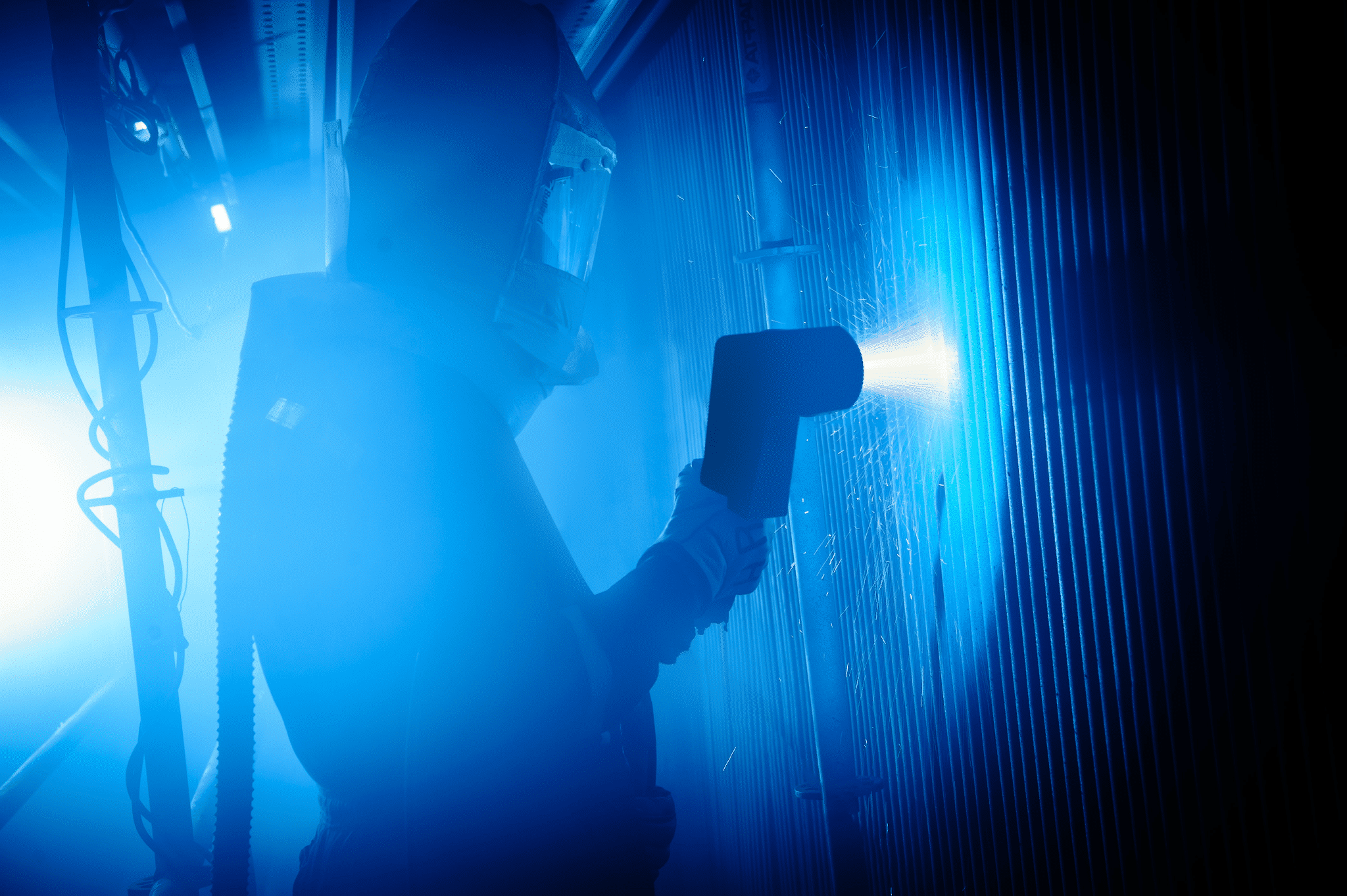
Upcoming webinar: Improve Boiler Reliability, Reduce Fouling & Lower Maintenance Costs
Learn how HVTS and automated weld overlay provides long-term protection against high-temperature corrosion and erosion while extending boiler tube life and reducing the risk of forced outages.
Understand how combining inspection, engineering expertise and advanced surface technologies can help:
- Extend asset life
- Reduce maintenance costs
- Improve boiler availability
- Increase operational efficiency
- Reduce unplanned outages
- Improve outage planning and execution

Frequently asked questions
Can erosion be eliminated from a CFB boiler?
The circulation of abrasive particles is inherent to CFB operation, so erosion cannot be completely removed. It can, however, be managed with an engineered sacrificial protection layer that wears instead of the underlying pressure part.
How is IGS HVTS® different from conventional thermal spray?
The difference is not simply the spray equipment. IGS combines proprietary materials, controlled high-velocity application, surface preparation, quality documentation and a CFB-specific protection specification based on the boiler’s actual degradation mechanisms.
Does the entire cladding system need to be replaced at every outage?
Normally, no. The protection is inspected and measured during planned outages. Only areas approaching their minimum specified thickness need to be locally refurbished.
How long will the protection last?
Service life depends on the location, fuel, ash chemistry, operating conditions and measured wear rate. The specification is therefore designed around the plant’s required operating cycle rather than applying one standard thickness throughout the boiler.
What information is required for an evaluation?
Useful information includes recent UT or inspection data, boiler drawings, fuel characteristics, tube-failure history, existing weld or coating locations and the date and duration of the next planned outage.
WATCH: How to reduce waterwall erosion in CFB boilers
Book a CFB boiler reliability evaluation with an IGS specialist.
We will review your current tube condition, repair history and operating objectives to identify where a targeted inspection and protection strategy could reduce risk and improve future outage planning.